Call us: +44 7802 724412
If you’ve heard the term EICR certificate and had no idea what it means, you’re not alone. Most people don’t give much thought to the wiring hidden inside their walls until something goes wrong, but that’s exactly why an EICR exists – to check everything is safe before a problem has a chance to develop.
EICR stands for Electrical Installation Condition Report. It’s a formal check of all the fixed electrical wiring and equipment in a building, carried out by a qualified electrician. By the end of this blog, you’ll know exactly what one is, what it involves, how long it’s valid for, and whether you need to arrange one.
What does an EICR actually check?
An EICR looks at all the fixed electrical installations in your property. That means the wiring in your walls, your consumer unit (the fuse box), sockets, light fittings, switches, and anything else that’s permanently connected rather than just plugged in.
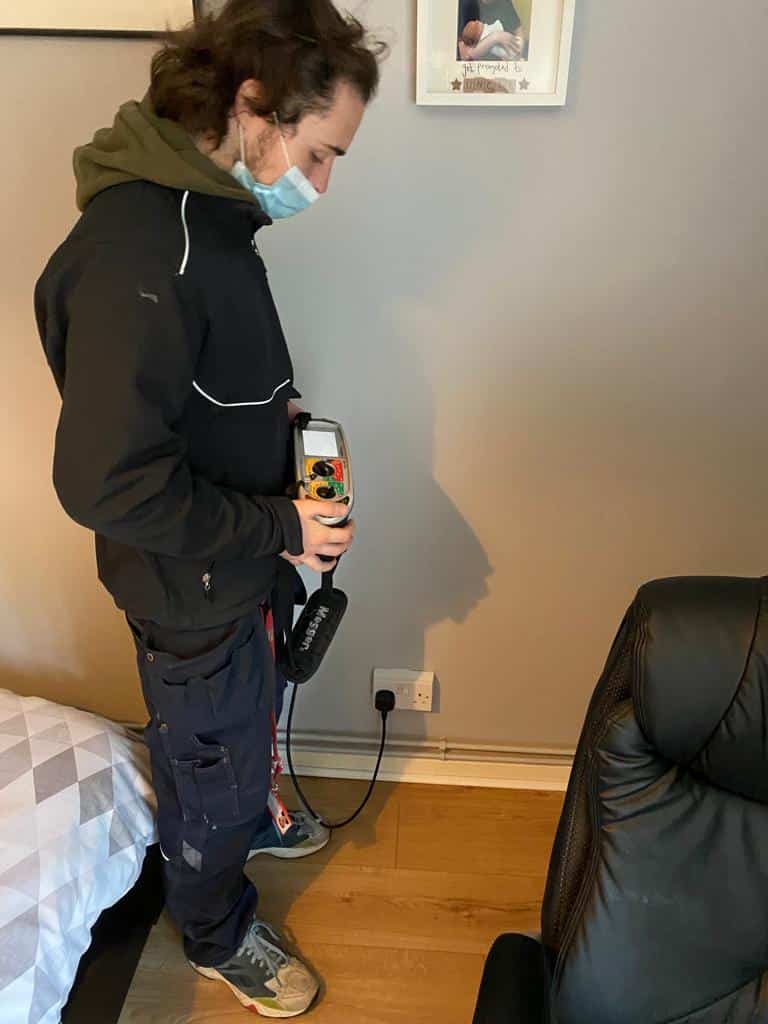
The electrician carrying out the report will inspect and test everything to check for damage, wear and tear, and anything that doesn’t meet current safety standards. They’re looking for anything that could cause an electric shock or start a fire, including wiring that’s deteriorated over time, connections that have worked loose, or outdated components that were fine when they were installed but are no longer considered safe.
Faulty and old wiring is one of the most common causes of electrical fires in UK homes, and a lot of that risk is invisible. You can’t see what’s going on inside a wall without opening it up, which is why a proper inspection matters so much.
What do the codes on an EICR mean?
When you receive your EICR, you’ll see observations listed alongside codes. These tell you how urgent any issues are. There are four main ones to know about.
C1 – Danger present.
This means there’s a risk of injury right now. Any C1 finding needs to be dealt with straight away before the installation can be used safely.
C2 – Potentially dangerous.
Not an immediate risk, but something that could become dangerous. C2 findings still need to be fixed as soon as reasonably possible.
C3 – Improvement recommended.
The installation doesn’t meet current standards but there’s no immediate safety risk. A C3 doesn’t fail the report, though fixing these items is sensible to bring things up to date.
FI – Further investigation required.
The electrician has found something that needs looking into more closely before a decision can be made. This is flagged so the right person can investigate further.
If your report comes back with a C1 or C2, it will be marked as unsatisfactory. A satisfactory report means no C1 or C2 findings were identified.
How long is an EICR valid for?
It depends on the type of property. For homeowners, the recommendation is to have your electrical installation checked at least every 10 years, or whenever you move into a new property. If you’re buying a house, it’s always worth checking when the last EICR was done before you commit to anything.
For rental properties, the rules are stricter. Since 2020, landlords in England have been legally required to have an EICR carried out at least every 5 years, and to provide a copy of the report to their tenants. Letting agents and landlords can face significant fines if they don’t comply.
For commercial properties, the recommended interval is usually every 5 years, though this can vary depending on the type of business and the demands placed on the electrical installation.
How can I tell if my wiring might be old?
There are a few visual clues that suggest your electrical installation could be out of date. Old round-pin sockets, light switches with a round shape rather than a flat plate, or wiring cables with fabric or rubber coating are all signs of an older system that should be checked as a priority.
If your fuse box has a wooden back, uses rewirable fuses instead of circuit breakers, or looks like it hasn’t been touched in decades, that’s another clear indicator. Modern consumer units use RCDs (residual current devices) to cut power automatically if something goes wrong, which older fuse boxes simply don’t have.
Even if your property looks relatively modern, wiring can still deteriorate over time. Damage from pests, DIY work by previous owners, or simply years of use can cause problems that aren’t visible to the eye, which is exactly why testing matters as much as visual inspection.
Who can carry out an EICR?
An EICR must be carried out by a qualified and competent electrician. It’s not something you can do yourself, and it’s not something to hand to someone who just says they’re an electrician without being able to demonstrate their qualifications.
Look for an electrician who is registered with a recognised scheme such as NICEIC, NAPIT, or Elecsa. These schemes verify that the electrician is properly trained and their work meets the required standards. Registration isn’t just a nice-to-have, it gives you real assurance that the person carrying out the inspection knows what they’re doing and will provide a report you can rely on.
What happens after the inspection?
Once the inspection is complete, you’ll receive your EICR document. If the report is satisfactory, you’ve got peace of mind that your electrics are in good shape and a record to show whoever needs it, whether that’s a tenant, a buyer, or a letting agent.
If the report comes back unsatisfactory, your electrician will go through what needs to be done and give you a quote for the remedial work. Once that work is completed, a new certificate or a minor works certificate is issued to confirm the problem has been resolved. Some electricians will do this as part of the same visit if the work is straightforward.
It’s worth keeping your EICR somewhere safe alongside other property paperwork. If you come to sell, remortgage, or rent your property, you may well be asked for it.
Book your EICR with SB Electrical
An EICR certificate isn’t just a piece of paper. It’s confirmation that the wiring running through your walls is safe, up to standard, and unlikely to cause you problems down the line. Whether you’ve just bought a property, haven’t had one done in a while, or need one to satisfy a legal requirement as a landlord, it’s one of those things that’s genuinely worth staying on top of.
At SB Electrical, we carry out EICRs for homeowners, landlords, and businesses. We’ll carry out a thorough inspection, talk you through anything we find, and make sure you have a report you can trust. Get in touch to arrange yours.